7 Anchor Text Examples for Natural Link Building 2026
Explore 7 anchor text example types with placement context, risk levels, and practical tactics for branded, exact-match, partial-match, and natural links.
A publisher replies to your guest-post pitch with a simple question: What anchor text do you want? You've already picked the target page, but now you're weighing a commercial keyword against a brand mention, wondering what the editor will accept and what you'll be comfortable defending later.
That decision shouldn't happen in isolation. The wording needs to fit the paragraph, describe the destination accurately, and reflect the placement's commercial relationship. A natural sentence doesn't make a paid ranking link compliant, and a relevant keyword doesn't make an unrelated article a useful placement.
Anchor text is the visible, clickable wording in a hyperlink. Google explains that it helps readers and search systems understand the destination before opening it in its SEO Starter Guide's link-text guidance.
The practical decision is which wording belongs in this particular placement. An author bio, a reference list, and a contextual guest-post citation don't need the same anchor.
Use the following anchor types as a working decision set, not a distribution formula. Each anchor should have a job, and your campaign tracker should record enough context to explain why you chose it.
1. Exact-Match Anchor Text
Exact-match anchor text repeats the keyword a destination page targets. If a SaaS page targets customer churn analysis tool, that precise phrase is its exact-match anchor.
Consider this illustrative sentence in a guest post about retention reporting:
A customer churn analysis tool can help the team investigate which customer segments need closer attention.
The phrase fits only if the destination actually provides that tool. Linking it to a general homepage or a thin promotional article would create a mismatch between the wording and the reader's next step.
My review rating is heightened scrutiny, particularly when the requested wording is commercial and repeated across placements. This is an editorial review label, not a Google risk score or a prediction of penalties.
Check the sentence and the existing profile
Before approving the anchor, inspect the target page's existing anchors in Ahrefs, Semrush, or Majestic. Look for repeated wording and ask whether the new placement adds a useful reference or merely another copy of the target keyword.
An analysis of Ahrefs anchor-text research reports weak exact-match ranking correlations, with Spearman values of 0.1436 using averages and 0.1869 using medians. Those correlations don't establish causation or justify a universal anchor percentage.
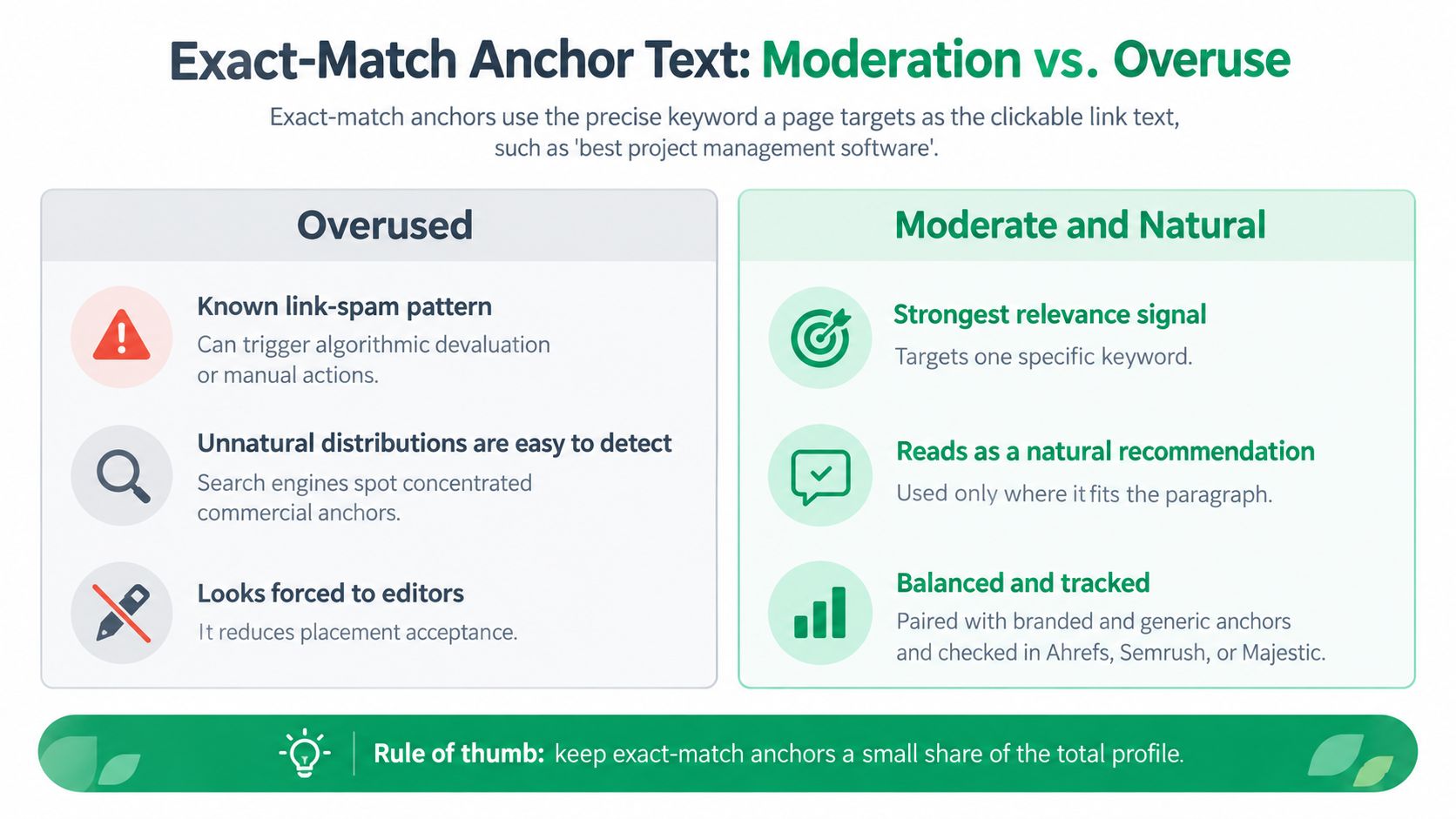
Log the exact phrase, target page, source paragraph, placement relationship, and approval reason. Reserve exact-match wording for sentences where it's the clearest description. Don't force it into a placement because a spreadsheet says the campaign needs more keyword anchors.
2. Partial-Match Anchor Text
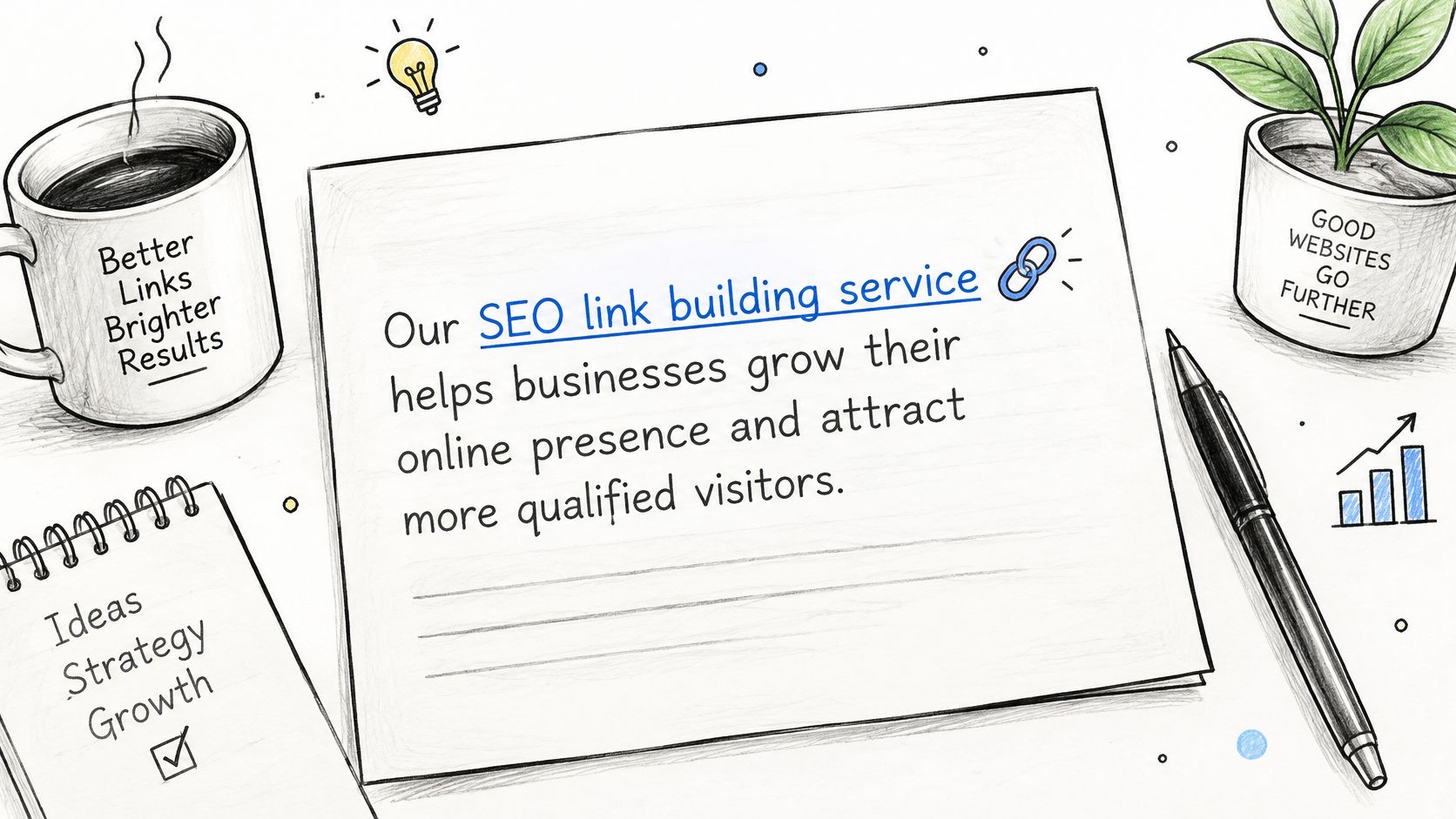
An ecommerce agency suggests adding managed link building for ecommerce brands to an existing article about outsourcing SEO. That's a plausible partial-match anchor if the destination targets managed link building and genuinely addresses ecommerce needs.
The extra words should clarify the destination, not disguise repetition. Adding best, trusted, or affordable to a commercial keyword doesn't automatically improve the reference.
Partial-match wording trades keyword precision for contextual detail. I'd give it a moderate editorial review rating: inspect the surrounding argument rather than assuming it's safer just because it isn't an exact match.
Make the added words earn their place
For a niche edit, compare the original paragraph with the proposed revision. If the editor has to introduce an unrelated outsourcing discussion just to accommodate the anchor, choose another paragraph or reject the placement.
Google recommends descriptive, reasonably concise wording that fits both pages, and warns against keyword stuffing in its guidance on writing effective anchor text.
- Before publishing: Confirm that modifiers such as ecommerce, enterprise, or managed describe something readers will find on the destination.
- In the tracker: Record the full anchor, its keyword family, the original paragraph, and the approved replacement paragraph.
- During review: Compare meaning as well as spelling. Slightly different phrases can still make the same repetitive commercial request.
Don't rotate synonyms mechanically. Write the sentence for the publisher's audience, then select the shortest linked phrase that accurately describes the useful next step.
3. Branded Anchor Text
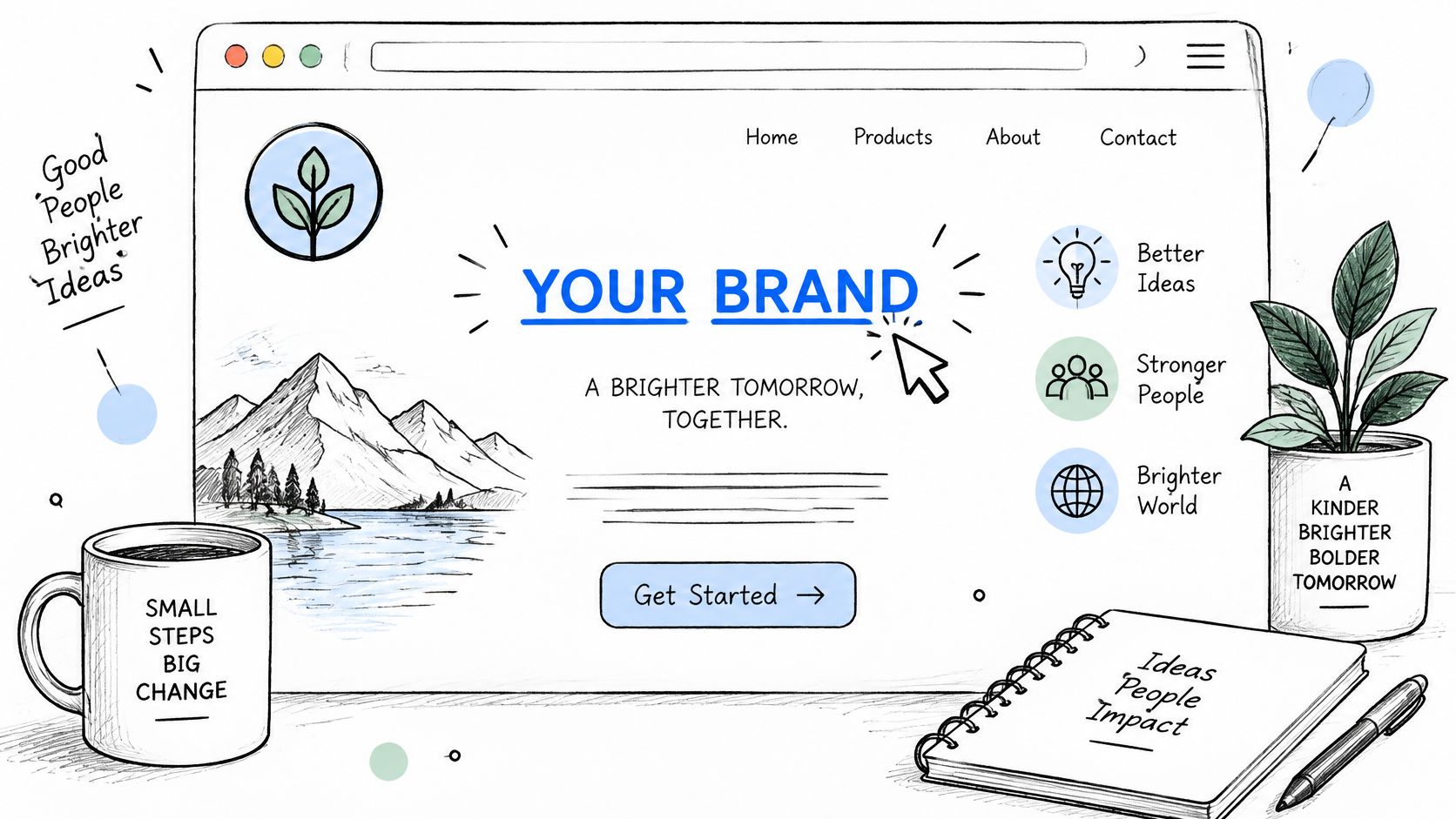
An author bio is usually a poor place to force a service keyword. A sentence identifying where the contributor works gives you a straightforward alternative: link the company's actual name.
For example, an illustrative bio could read: The author leads retention research at Brand, where the team develops customer analytics software. The brand name would be the clickable wording, while the rest of the sentence explains the company's relevance.
Branded anchors prioritize identity over destination detail. That makes them useful for company mentions, but the reader may still need surrounding text to understand why they should visit.
Practical rule: Use the brand when the reference is about the organization. Use a descriptive phrase when the reference is about a specific resource.
Verify the identity and destination
For a genuine company attribution, I'd assign branded wording lower wording-related concern, not blanket approval of the placement. A paid link doesn't become compliant because the anchor is a company name.
Check the spelling, capitalization, and destination before publication. A bio identifying an employer might reasonably point to the company homepage; a reference to its research should usually point to the actual research.
In the tracker, separate brand-only from brand plus description. Record the placement location as well, because an author-bio link serves a different purpose from an editorial citation in the article body.
Don't commission unnecessary branded links just to change a distribution chart. Approve them when the publisher has a legitimate reason to identify the business.
4. Naked URL Anchor Text
A reference list may call for the web address itself rather than a descriptive phrase. Naked URL anchors display the destination address as the clickable wording, instead of a brand name or topic description.
For an illustrative placement, consider an industry association's supplier directory. Its template might provide separate fields for the company name, service description, and website address, with the address serving as the link.
That format makes the destination explicit, but it gives readers less help understanding a specific resource. The trade-off is transparency versus readability, especially when the destination has a long path or tracking parameters.
Keep address-style links in suitable placements
I'd rate wording concerns as lower in a genuine reference field, with more scrutiny when someone inserts a long address into otherwise readable editorial copy. The format isn't a reason to waive publisher or commercial-relationship checks.
- Check the destination: Open the published link and confirm it reaches the intended page, rather than relying on the address displayed on screen.
- Check the format: Follow the publisher's established reference style. Don't request several address variants purely to manufacture anchor diversity.
- Log the evidence: Save the displayed address, actual destination, placement location, and any redirect observed during verification.
A naked URL can be appropriate in a directory and awkward in a guest-post paragraph. If the sentence discusses a detailed pricing comparison, descriptive wording will usually explain the next step more clearly than an address.
Don't set a naked-URL quota just to offset commercial anchors. Assign this type to placements where readers reasonably expect to see a web address, and retain descriptive anchors where they're more useful.
5. Generic Anchor Text
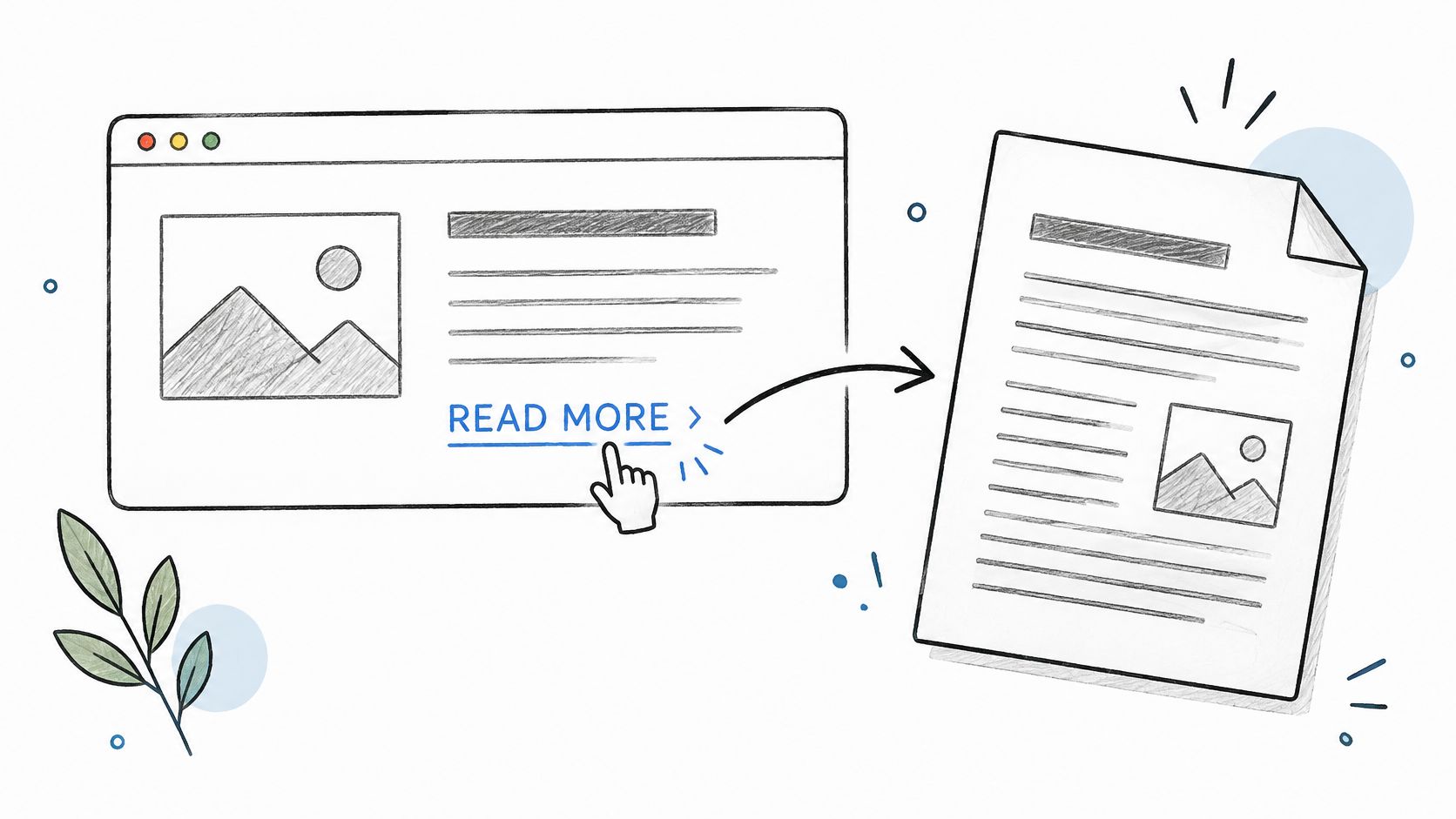
Read more might fit a publisher's sidebar, but it's a weak anchor text example for a paragraph that needs to identify a particular resource. The reader shouldn't have to open the link to discover what the writer meant.
In an illustrative roundup, compare read the full guide with read the full payroll pricing guide. The second phrase gives readers a clearer destination, although it's better classified as descriptive wording than as a purely generic anchor.
That classification matters when reviewing campaign reports. Don't call every phrase without the exact target keyword generic.
Don't make an anchor less useful just to make a distribution chart look more varied.
Review clarity rather than keyword absence
I'd give generic wording a clarity concern, rather than treating it as automatically low risk. The immediate question is whether readers can identify what they'll find, especially when the page contains several similar calls to action.
For an editorial sidebar, check the heading, summary, and linked wording together. For a standalone text link in a reference list, ask whether the wording remains understandable without that surrounding explanation.
Record the anchor text, module heading, destination, and editorial constraint in the campaign tracker. If the publisher requires a standard read-more label, document that constraint rather than reporting the placement as a deliberate topical anchor.
Keep generic wording where the interface provides sufficient context and the editor has a reason for it. Where you can improve clarity, request a concise description of the destination instead of preserving ambiguity for supposed SEO balance.
6. Image Anchor Text (Alt Text as Anchor)
A linked logo or partner badge won't show visible anchor wording in the same way as a text link. For linked images, descriptive alt text supplies anchor context, so verification needs to include the image's attributes, not just its appearance.
Consider an illustrative author headshot linking to the contributor's company page. Naming the person may accurately describe the image, but the link's destination also needs to make sense within the surrounding bio.
A company logo linking to that company's homepage is a clearer relationship. Neither placement justifies turning the alt text into a list of services.
Inspect the image and the link separately
Use the browser's inspection tools to check the image's alt attribute and its enclosing link. Confirm that the description matches the image and that the destination matches what the surrounding placement promises.
The supplied video provides an additional visual reference for this topic.
My review rating is context-dependent, with closer attention for sponsor logos and badges because their commercial relationship needs separate treatment. Google identifies paid ranking links and optimized anchors in guest posts as link-spam examples, while recommending rel="sponsored" or rel="nofollow" for advertising and sponsorship in its link-spam policies.
Log image placement, alt text, destination, link attributes, and sponsorship status. Don't report an image link as having no anchor just because there's no visible linked phrase.
The action is straightforward: describe the image accurately, verify the destination, and qualify any commercial relationship appropriately. Keyword-heavy alt text isn't a substitute for those checks.
7. Long-Tail Contextual Phrase Anchor Text
Start with the reader's task rather than a commercial keyword. In an ecommerce packaging guide, sustainable packaging options for small brands could be a useful anchor if the destination actually helps that audience compare suitable products.
That's a long-tail contextual phrase: specific enough to explain the next step, but still part of the author's sentence. It may overlap with partial-match wording, so your reporting needs a consistent classification rule.
The trade-off is specificity versus overpromising. A detailed phrase can describe a destination well, but it can also imply guidance that a product page doesn't contain.
Before approving: Read the destination as though you followed the link without knowing the advertiser. Does it fulfill the phrase's promise?
Match the promise to the landing page
In an illustrative SaaS guest post, automated onboarding email sequences could link naturally to a relevant feature page. By contrast, how to design automated onboarding email sequences promises instructional content and may require a guide instead.
I'd assign lower wording-related concern when the task and destination align, with higher scrutiny if the sentence was constructed solely to introduce the link. Length alone doesn't make an anchor natural, compliant, or effective.
- Check the placement: Confirm that the publisher, article, and paragraph address the same audience need as the destination.
- Check the promise: Remove claims the destination can't support, including implied tutorials, comparisons, or recommendations.
- Log the intent: Record the full phrase, reader task, destination type, surrounding sentence, and approval rationale.
Use long-tail wording when readers need that level of detail. If a shorter phrase communicates the same destination accurately, shorten it rather than treating anchor length as an optimization target.
Anchor text types compared by risk, keyword signal, and placement fit
Treat the labels in this table as editorial review ratings, not a Google risk score or a prediction of penalties. They tell you how closely to examine the wording before approving a placement, not whether the anchor is safe or dangerous.
| Anchor Type | Editorial Review Rating | Keyword Signal | Best Placement Context | Check to Run Before Publishing |
|---|---|---|---|---|
| Exact-Match Anchor Text | High scrutiny if overused; low in moderation | Strong signal for one exact target keyword | Natural contextual recommendation on a priority page | Count existing exact-match anchors pointing to the same target page before approving another |
| Partial-Match Anchor Text | Low to moderate when varied and contextual | Includes the target keyword with supporting words | Relevant editorial sentences in guest posts or niche edits | Confirm the supporting words vary across placements and the sentence reads naturally |
| Branded Anchor Text | Low | Brand recognition; little keyword relevance | Brand mentions, author bios, resource lists, and testimonials | Confirm the mention is a genuine attribution or reader-facing reference |
| Naked URL Anchor Text | Low | No descriptive keyword signal | Citations, reference lists, press mentions, and resource sections | Verify the URL resolves correctly and displays cleanly in the reference field |
| Generic Anchor Text | Clarity concern; not automatically low risk | No topical or keyword signal | Calls to action and navigational links | Ask whether readers can predict the destination from the wording and surrounding sentence |
| Image Anchor Text (Alt Text as Anchor) | Low when alt text is descriptive and accurate | Context comes from the image's alt text | Linked logos, badges, author images, and product showcases | Read the alt text as the anchor and flag anything misleading or keyword-stuffed |
| Long-Tail Contextual Phrase Anchor Text | Low when contextually relevant | Specific multi-word phrase targeting narrower queries | Expert-written editorial content that closely matches the linked page | Confirm the phrase's promise matches what the destination page actually delivers |
Record the rating, the check result, and your approval rationale in the campaign tracker beside the target page and requested wording. A second reviewer should be able to see why each label was assigned, which is what turns a comparison table into a working approval standard.
Build an Anchor Profile You Can Defend Line by Line
A defensible anchor plan starts with target pages and placement purposes, not a universal percentage chart. Decide which pages need references, what those references should help readers do, and which publishers have a credible reason to include them.
Set a working target mix based on those opportunities and the existing profile. Treat it as a planning aid, not a Google requirement or a guarantee of safety.
Assign each proposed anchor to a specific page and placement before pitching. A company attribution may call for branded wording, a resource citation may need a descriptive phrase, and a reference field may suit a naked URL.
Review decisions before expanding volume
Your campaign tracker should let another reviewer reconstruct the decision without searching through email threads.
- Placement details: Record the publisher, source page, placement type, proposed topic, and target page.
- Anchor rationale: Save the requested wording, approved wording, reader intent, and reason the destination fits.
- Relationship and verification: Record payment or sponsorship status, required link attributes, approval status, and the verified live placement.
- Review outcome: Note whether to retain the approach, revise the destination, change future wording, or reject similar opportunities.
Review distribution weekly, including anchors by target page and referring domain. Investigate repeated commercial phrases, but also inspect brand-heavy placements that offer little editorial value and long-tail anchors that promise more than the destination delivers.
Don't interpret every ranking movement as an anchor-text result. Changes in content, referring pages, technical conditions, and competing results can complicate that judgment; use performance monitoring to guide investigation rather than claim isolated causation.
Our process organizes these decisions into a 90-day roadmap covering target pages, the anchor plan, link velocity, publisher criteria, and content angles, with pre-approval built in. We establish clear scope and pricing before work begins, then use weekly sprint reviews to inspect deliveries, live URLs, and impact.
The practical standard is whether you can explain each placement line by line. If the only justification is that the campaign needed another exact-match or generic anchor, revise the plan before requesting more links.
Linkbuilding.services provides managed guest posting, contextual placements, and white-label delivery, including publisher research, content production, placement verification, and reporting. Visit Linkbuilding.services to discuss your target pages and build an anchor plan with pre-approval and verifiable live placements.
Published via the Outrank app